Why Setralit-Fibres?
What is Setralit?
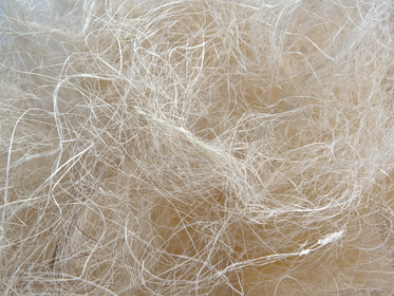
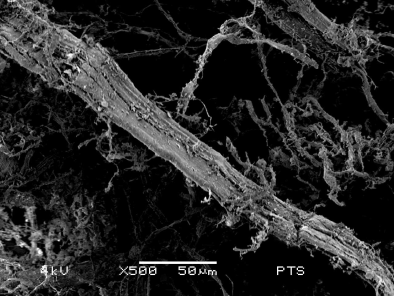
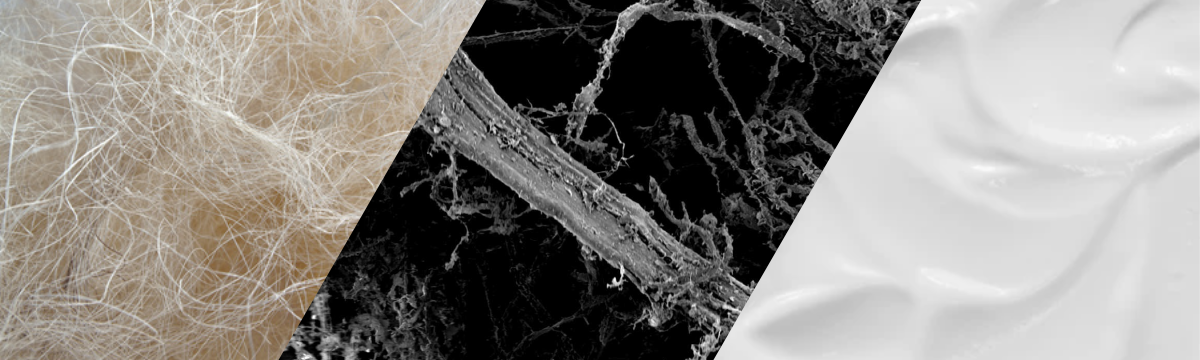
SETRALIT® is the brand name of an industrially usable natural fiber produced by ECCO. It has been improved by mechanical or chemical treatment and is suitable for high-quality technical applications. There are numerous different types of Setralit, which - depending upon targeted application - are won from different raw materials and by different refining methods (Setralit procedures).
The base (raw) material can vary. All natural fibers are possible candidates for refinement. Preferred are the bast fibers of annual plants (flax, hemp, jute, kenaf, a.o.), but fibers such as cotton, sisal, ramie , nettle, abaca, cabuja, coir are suitable, too. Even the not-fibrous components of fiber plants (so-called shives) can be improved using appropriate Setralit procedures.
Hence Setralit® is a technical natural fiber on basis of renewable raw materials.
Which characteristics does Setralit have?
SETRALIT® is combining the positive characteristics of natural cellulose fibers and those of a synthetic industrial fiber. These are among other things:
a) compared with conventional natural fibers:
- high purity: Impurities (dust, microorganisms) and plant associated substances
are completely or to a large extent distant
- higher temperature stability due to cleanliness of fiber
- suitable for plastic composite materials (e.g. injection moulding)
- custom-made and repeatable constant quality
- versatile applicability
b) compared with chemical fibres:
- apid and high water absorption, good suction property
- very small electrostatic loading
- caustic solution-steadily and suitable for autoclaving
- bio-degradable
- good price- performance ratio
How is Setralit produced?
The manufacturing of SETRALIT® is divided in two stages:
1) fibre-pulping process by ultrasonic: This Setralit® procedure was developed particularly for natural fibers and can be varied depending upon raw material and intended purpose.
2) In a further refinement process the cleaned SETRALIT®-fiber, depending upon final's application, will be cut, grinded, fibrillated or otherwise treated.
By „Setralit procedure“ one understands the combination of both stages of the above processes to get the final product. Both the ultrasonic procedure and stage 2 are patent protected (material, method and device).
Where will you find Setralit?
It can be converted either to a fiber-reinforced composite (semi-finished material, Compounds) or directly in final products (fiber-reinforced building materials like aerated cement (YTONG), seals, fleeces a.o.t).
Areas of application for Setralit are:
Building sector: Finery, ready-mix mortar, fibrated concrete, concrete, aerated concrete, gypsum, screed, lime sandstone, gypsum cardboard, insulating materials, insulation boards, emulsion paints.
Plastics: Fiber matrix semi-finished material, Prepreg, SMC, BMC, injection moulding, shaped parts, fiber-reinforced plastics, in particular bio polymers.
Textiles: Clothing, home textiles, industrial textiles, geo textiles, filter, Spunlace of fleeces, medicine and sanitary articles.
Chemical industry: Friction linings, seals, filter means, fillers, thixotropic agents, bitumen, rubber, polishing agent, cements, putty, adhesives.
Paper: Technical papers, cardboard boxes of special papers.
Other applications (especially for shiives and other by-products): Animal litter, bulk materials, animal fodder (pectin among other things), fermentation gas, power production.
The length of the technical SETRALIT® fibre and trends of application are shown... more
What is replaced by Setralit?
SETRALIT® is an ecological and economically interesting alternative to synthetic fibers and to conventional natural fibers. The scope of applications, in which early asbestos was used, can be covered with SETRALIT®. Thus SETRALIT® is also a replacement for asbestos.
SETRALIT®-fibers can compete with conventionally won natural fibers as well as high-quality synthetic fibers, like e.g. Para Aramiden. On the contrary to conventional natural fibers the highlight of SETRALIT®-fiber is: • the high purity, • the mastering of higher thermal maximum stress, • repetitive unchanged quality.
The benefit of SETRALIT® compared to high-quality synthetic fibers, are the environmentally friendly production and the general use of the product as well as the very attractive price/ performance ratio.
The market for fibers from regenerating raw materials are growing rapidly. A long-term goal of the ECCO is to advance in the replacement of conventional mineral and synthetic fibers by anti-toxic natural fibers in the industry without having to make thereby compromises with efficiency or quality of the fibers.
According to nova- institute, Hürth, the intensified use of fabric like material from agrarian raw materials and commodities will have no alternatives in the future. Bio materials, for e.g. biologically degradable and permanent bio plastics, natural fiber-strengthened plastics (NFK) and Wood plastic Composites (WPC), are a particularly interesting new group of materials. The SETRALIT®-fiber is excellent for the reinforcement of such bio plastics, since it combines high efficiency with ecological advantages.
Where and how fast can you get Setralit?
Our fibrillated standard SETRALIT®-fiber - type NfU/31-2, you can order, at any time with our contact form sheet by fax. Further information and free samples (up to 1 kg) will be gladly put to your disposal.
Delivery times starting from order:
up to 1 ton: 2 weeks
up to 5 tons: 3 weeks
up to 10 tons: 4 weeks
up to 20 tons: 6 weeks
The following bundles can be supplied:
a) Bundle, 1.00 x 0.50 x ca.0, 90 m, mass density ~0.24 kg/l: approx. 120 kg;
b) Loose fiber in plastic bags, mass density ~0.05 kg/l: 5, 10 and 20 kg;
c) Loose fiber in Big Bags 0.90 x 0.85 x 1.00 m with In-liner, mass density ~0.05-
0.08 kg/l: 40, 50 and 60 kg.
Why Setralit (conclusion)?
Increasing market for high-tech/ high-performance natural fibers
- Exchange of synthetic fibers
- miscible with with synthetic fibers (cost reducer)
- new markets/new applications
Access on innovative and patented technologies
- Larger profit margin
- decreased manufacturing costs
- small investment volume
- renewable raw materials/world-wide available
Increasing political pressure
- Products and production are pollution free
- CO2-neutral/ no atmospheric greenhouse gases
The base (raw) material can vary. All natural fibers are possible candidates for refinement. Preferred are the bast fibers of annual plants (flax, hemp, jute, kenaf, a.o.), but fibers such as cotton, sisal, ramie , nettle, abaca, cabuja, coir are suitable, too. Even the not-fibrous components of fiber plants (so-called shives) can be improved using appropriate Setralit procedures.
Hence Setralit® is a technical natural fiber on basis of renewable raw materials.
Which characteristics does Setralit have?
SETRALIT® is combining the positive characteristics of natural cellulose fibers and those of a synthetic industrial fiber. These are among other things:
a) compared with conventional natural fibers:
- high purity: Impurities (dust, microorganisms) and plant associated substances
are completely or to a large extent distant
- higher temperature stability due to cleanliness of fiber
- suitable for plastic composite materials (e.g. injection moulding)
- custom-made and repeatable constant quality
- versatile applicability
b) compared with chemical fibres:
- apid and high water absorption, good suction property
- very small electrostatic loading
- caustic solution-steadily and suitable for autoclaving
- bio-degradable
- good price- performance ratio
How is Setralit produced?
The manufacturing of SETRALIT® is divided in two stages:
1) fibre-pulping process by ultrasonic: This Setralit® procedure was developed particularly for natural fibers and can be varied depending upon raw material and intended purpose.
2) In a further refinement process the cleaned SETRALIT®-fiber, depending upon final's application, will be cut, grinded, fibrillated or otherwise treated.
By „Setralit procedure“ one understands the combination of both stages of the above processes to get the final product. Both the ultrasonic procedure and stage 2 are patent protected (material, method and device).
Where will you find Setralit?
SETRALIT® is a raw material for industrial manufacturing and versatile applicable. In technically fastidious applications (e.g. friction linings) expensive synthetic fibers (e.g. Aramide) can be replaced.
It can be converted either to a fiber-reinforced composite (semi-finished material, Compounds) or directly in final products (fiber-reinforced building materials like aerated cement (YTONG), seals, fleeces a.o.t).
Areas of application for Setralit are:
Building sector: Finery, ready-mix mortar, fibrated concrete, concrete, aerated concrete, gypsum, screed, lime sandstone, gypsum cardboard, insulating materials, insulation boards, emulsion paints.
Plastics: Fiber matrix semi-finished material, Prepreg, SMC, BMC, injection moulding, shaped parts, fiber-reinforced plastics, in particular bio polymers.
Textiles: Clothing, home textiles, industrial textiles, geo textiles, filter, Spunlace of fleeces, medicine and sanitary articles.
Chemical industry: Friction linings, seals, filter means, fillers, thixotropic agents, bitumen, rubber, polishing agent, cements, putty, adhesives.
Paper: Technical papers, cardboard boxes of special papers.
Other applications (especially for shiives and other by-products): Animal litter, bulk materials, animal fodder (pectin among other things), fermentation gas, power production.
The length of the technical SETRALIT® fibre and trends of application are shown... more
What is replaced by Setralit?
SETRALIT® is an ecological and economically interesting alternative to synthetic fibers and to conventional natural fibers. The scope of applications, in which early asbestos was used, can be covered with SETRALIT®. Thus SETRALIT® is also a replacement for asbestos.
SETRALIT®-fibers can compete with conventionally won natural fibers as well as high-quality synthetic fibers, like e.g. Para Aramiden. On the contrary to conventional natural fibers the highlight of SETRALIT®-fiber is: • the high purity, • the mastering of higher thermal maximum stress, • repetitive unchanged quality.
The benefit of SETRALIT® compared to high-quality synthetic fibers, are the environmentally friendly production and the general use of the product as well as the very attractive price/ performance ratio.
The market for fibers from regenerating raw materials are growing rapidly. A long-term goal of the ECCO is to advance in the replacement of conventional mineral and synthetic fibers by anti-toxic natural fibers in the industry without having to make thereby compromises with efficiency or quality of the fibers.
According to nova- institute, Hürth, the intensified use of fabric like material from agrarian raw materials and commodities will have no alternatives in the future. Bio materials, for e.g. biologically degradable and permanent bio plastics, natural fiber-strengthened plastics (NFK) and Wood plastic Composites (WPC), are a particularly interesting new group of materials. The SETRALIT®-fiber is excellent for the reinforcement of such bio plastics, since it combines high efficiency with ecological advantages.
Where and how fast can you get Setralit?
Our fibrillated standard SETRALIT®-fiber - type NfU/31-2, you can order, at any time with our contact form sheet by fax. Further information and free samples (up to 1 kg) will be gladly put to your disposal.
Delivery times starting from order:
up to 1 ton: 2 weeks
up to 5 tons: 3 weeks
up to 10 tons: 4 weeks
up to 20 tons: 6 weeks
The following bundles can be supplied:
a) Bundle, 1.00 x 0.50 x ca.0, 90 m, mass density ~0.24 kg/l: approx. 120 kg;
b) Loose fiber in plastic bags, mass density ~0.05 kg/l: 5, 10 and 20 kg;
c) Loose fiber in Big Bags 0.90 x 0.85 x 1.00 m with In-liner, mass density ~0.05-
0.08 kg/l: 40, 50 and 60 kg.
Why Setralit (conclusion)?
Increasing market for high-tech/ high-performance natural fibers
- Exchange of synthetic fibers
- miscible with with synthetic fibers (cost reducer)
- new markets/new applications
Access on innovative and patented technologies
- Larger profit margin
- decreased manufacturing costs
- small investment volume
- renewable raw materials/world-wide available
Increasing political pressure
- Products and production are pollution free
- CO2-neutral/ no atmospheric greenhouse gases
SETRALIT®-natural fibersThe ultrasonic methodThe basic raw material of SETRALIT®-Fibre is a non-wood natural fibre which is generally called “vegetable fibre”. In many cases this is a bast fibre like hemp, flax, nettle, kenaf... more MIPO® & MoS2Cold forging with MIPO: Lubricants and especially solid lubricants are used, not only to ease the movement direction of the cold metal under high pressure, but also to serve as separating agent, to fast... more SETRAL® - Lubricants
R&D Services: Setral develops and produces high performance as well as special lubricants... more
Job Order Production: We manufacture lubricants according to your instructions... more Private Label: We have the ability to produce and promptly deliver your own products. A multitude of packages... more Being an innovativ producer of high performance lubricants, setral supports our customers to gain effectiv profit by using high quality solutions. |